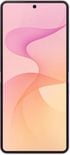
Samsung Galaxy Z Flip 8 vs Google Pixel 11
83
out of 100
VS
81
out of 100
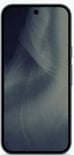
Here we compared two flagship smartphones: the 6.9-inch Samsung Galaxy Z Flip 8 (with Exynos 2600) that was released on July 22, 2026, against the Google Pixel 11, which is powered by Google Tensor G6. On this page, you will find tests, full specs, strengths, and weaknesses of each of the devices.
Select the amount of RAM to evaluate performance and value for money more precisely
Key differences
Reasons to consider the Samsung Galaxy Z Flip 8
- Has a 0.6 inch larger screen size
- Delivers 25% higher peak brightness (2671 against 2131 nits)
- Compatible with Wi-Fi 7 wireless networks
- CPU with a higher amount of cores (+3)
- Supports Dolby Atmos sound technology
- 26% faster in single-core GeekBench 6 test: 3235 and 2575 points
- Weighs 17 grams less
Reasons to consider the Google Pixel 11
- The rear camera has a 5x optical zoom
- Newer Bluetooth version (v6.0)
- Waterproof body (IP68 classification)
Review
Display
Screen quality, color accuracy, brightness
Camera
Photo and video recording quality
Performance
CPU and memory performance (apps, system)
Gaming
Capabilities for playing modern games
Battery
Battery life, charging type and speed
Connectivity
Networks, ports, data transmission
Scores with a red asterisk (*) are approximate and may change in the future as we gather more data.
Select your primary usage scenario to get a more accurate NanoReview Score
Value for money (Beta)
Tests and specifications
Comparison table of technical specifications and testsDisplay
| Type | Dynamic AMOLED | OLED |
| Size | 6.9 inches | 6.3 inches |
| Resolution | 1080 x 2520 pixels | 1080 x 2424 pixels |
| Aspect ratio | 21:9 | 20:9 |
| PPI | 400 ppi | 422 ppi |
| Refresh rate | 120 Hz | 120 Hz |
| Adaptive refresh rate | Yes (1-120 Hz) | Yes |
| Max rated brightness | 1600 nits | 3000 nits |
| Max rated brightness in HDR | 2600 nits | 2000 nits |
| HDR support | Yes, HDR10+ | Yes, HDR10+ |
| Screen protection | Gorilla Glass Victus 2 | Gorilla Glass Victus 2 |
| Screen-to-body ratio | 88.3% | 87.1% |
| Display features | - DCI-P3 - Always-On Display |
- DCI-P3 - Always-On Display |
Screen space comparison
Galaxy Z Flip 8
6.9″ (21:9 ratio) = 17.2 in2
Pixel 11
6.3″ (20:9 ratio) = 14.9 in2
~16% more screen space
Peak brightness test (auto)
Design and build
| Height | 166.9 mm (6.57 inches) | 152.8 mm (6.02 inches) |
| Width | 75.4 mm (2.97 inches) | 72 mm (2.83 inches) |
| Thickness | 6.1 mm (0.24 inches) | 8.6 mm (0.34 inches) |
| Weight | 180 g (6.35 oz) | 197 g (6.95 oz) |
| Waterproof | IP48 | IP68 |
| Advanced cooling | Vapor chamber | Vapor chamber |
| Rear material | Glass | Glass |
| Frame material | Metal | Metal |
| Colors | Gray, Green, Pink | Black, Green, Red, Purple |
| Fingerprint scanner | Yes, in-button | Yes, in-display |
Screen-to-body ratio
Performance
| Chipset | Samsung Exynos 2600 | Google Tensor G6 |
| Max clock | 3800 MHz | 4110 MHz |
| CPU cores | 10 (1 + 3 + 6) | 7 (1 + 4 + 2) |
| Architecture | - 6 cores at 2.75 GHz: C1-Pro - 3 cores at 3.25 GHz: C1-Pro - 1 core at 3.8 GHz: C1-Ultra |
- 2 cores at 2.65 GHz: C1-Pro - 4 cores at 3.38 GHz: C1-Pro - 1 core at 4.11 GHz: C1-Ultra |
| L3 cache | 16 MB | 8 MB |
| Manufacturing | Samsung | TSMC |
| Lithography process | 2 nanometers | 3 nanometers |
| Neural processor (NPU) | AI engine with 32K MAC NPU | Yes |
| Graphics | Xclipse 960 | PowerVR DXT-48-1536 |
| GPU shading units | 1792 | 768 |
| GPU clock | 980 MHz | 1286 MHz |
| FLOPS | ~7024.6 GFLOPS | ~1975.3 GFLOPS |
Benchmarks
Geekbench 6 (Single-Core)
Geekbench 6 (Multi-Core)
Compute Score (GPU)
| Compute Score (GPU) | 27213 | 6048 |
| Single-core score | 3235 | 2575 |
| Multi-core score | 10904 | 6027 |
AnTuTu Benchmark 11
| CPU | 1030159 | 848037 |
| GPU | 1215533 | 271374 |
| Memory | 383071 | 297105 |
| UX | 484584 | 455981 |
| Total score | 3113347 | - |
| Samples | Less than 3 | Less than 3 |
AnTuTu 11 Ranking List (#92nd place)
Memory
| RAM size | 12 GB | 12 GB |
| Memory type | LPDDR5X | LPDDR5X |
| Channels | 4 | 4 |
| Storage size | 256 GB | 256 GB |
| Storage type | UFS 4.0 | UFS 4.0 |
| Memory card | No | No |
Software
| Operating system | Android 17 | Android 17 |
| ROM | One UI 9.0 | Stock Android |
| OS updates | 7 years | 7 years |
| Security updates | 7 years | 7 years |
Battery
| Capacity | 4300 mAh | 4985 mAh |
| Max charge power | 25 W | 30 W |
| Battery type | Li-Po | Li-Ion |
| Replaceable | No | No |
| Wireless charging | Yes (15 W) | Yes (25 W) |
| Reverse charging | Yes, (wireless) | Yes, (wireless) |
| Bypass charging | Yes | - |
| Fast charging | Yes (56% in 30 min) | Yes (59% in 30 min) |
| Full charging time | 1:19 hr | 1:19 hr |
| Web browsing | 09:47 hr | 10:46 hr |
| Watching video | 19:25 hr | 22:05 hr |
| Gaming | 05:38 hr | 06:38 hr |
| Standby | 95 hr | 86 hr |
General battery life
Smartphones With Long Battery Life (#148th place)
Main camera
| Matrix | 50 megapixels | 50 megapixels |
| Image resolution | 8160 x 6120 | - |
| Zoom | Digital | Optical, 5x |
| Flash | LED | LED |
| Stabilization | Optical | Optical |
| 8K video recording | No | No |
| 4K video recording | Up to 60FPS | Up to 60FPS |
| 1080p video recording | Up to 60FPS | Up to 60FPS |
| Slow motion | 240 FPS (1080p) | 240 FPS (1080p) |
| Angle of widest lens | 123° | 120° |
| Lenses | 1) Standard: 50 MP 2) Ultrawide: 12 MP |
1) Standard: 48 MP 2) Telephoto: 10.8 MP 3) Ultrawide: 13 MP |
| Camera features | - Bokeh mode - Pro mode |
- Bokeh mode - Pro mode - RAW support |
| Image resolution | 50 MP | 48 MP |
| Aperture | f/1.8 | f/1.7 |
| Focal length | 23 mm | 24 mm |
| Sensor | Samsung ISOCELL GN3 | - |
| Sensor size | 1/1.57" (≈ 0.64 inch) | 1/1.56" (≈ 0.64 inch) |
| Pixel size | 1 micron | 1 micron |
| Autofocus | Phase autofocus (Dual Pixel) | Phase autofocus (Dual Pixel) |
| Stabilization | Optical | Optical |
| Image resolution | - | 10.8 MP |
| Aperture | - | f/3.1 |
| Focal length | - | 112 mm |
| Sensor | - | Samsung S5K3J1 |
| Sensor size | - | 1/3.2" (≈ 0.31 inch) |
| Pixel size | - | 0.31 micron |
| Stabilization | - | Optical |
| Image resolution | 12 MP | 13 MP |
| Aperture | f/2.2 | f/2.2 |
| Focal length | 13 mm | - |
| Sensor | Samsung ISOCELL 3LU | Sony IMX712 |
| Sensor size | 1/3.2" (≈ 0.31 inch) | 1/3.06" (≈ 0.33 inch) |
| Pixel size | 1.12 micron | 0.32 micron |
| Stabilization | Digital | Digital |
DxOMark main camera tests
Photo quality
Video quality
Generic main camera score
| Bokeh | - | 160 |
| Zoom | - | 137 |
| Samples | - | Photo samples of Google Pixel 11 from DxOMark |
Selfie camera
| Megapixels | 10 megapixels | 10.5 megapixels |
| Image resolution | 3648 x 2736 | 3648 x 2736 |
| Aperture | f/2.2 | f/2.2 |
| Focal length | 23 mm | 20 mm |
| Sensor | - | Samsung S5K3J1 |
| Sensor size | - | 1/2.65" (≈ 0.38 inch) |
| Pixel size | 1.12 micron | 1.22 micron |
| Autofocus | No | Phase autofocus |
| Stabilization | Digital | Digital |
| Video resolution | 2160p (4K) at 60 FPS | 2160p (4K) at 60 FPS |
| Depth sensor (TOF 3D) | No | No |
Connectivity
| Wi-Fi standard | Wi-Fi 7 (802.11 a/b/g/n/ac/ax/be) | Wi-Fi 6E (802.11 a/b/g/n/ac/ax) |
| Wi-Fi features | - Dual Band - Wi-Fi MiMO - Wi-Fi Direct - Wi-Fi Hotspot - Wi-Fi Display |
- Dual Band - Wi-Fi MiMO - Wi-Fi Direct - Wi-Fi Hotspot - Wi-Fi Display |
| Bluetooth version | 5.4 | 6.0 |
| Bluetooth features | LE | LE |
| USB type | USB Type-C | USB Type-C |
| USB version | 3.2 | 3.2 |
| USB features | - Charging - USB-Storage mode - OTG |
- Charging - USB-Storage mode - OTG |
| DisplayPort | Yes | Yes |
| GPS | GPS, GLONASS, Beidou, Galileo, QZSS | GPS, GLONASS, Galileo |
| NFC* | Yes | Yes |
| Infrared port | No | No |
| Number of SIM* | 1 | 1 |
| Type of SIM card | Nano | Nano |
| Multi SIM mode | Standby | Standby |
| eSIM support* | Yes | Yes |
| Hybrid slot | No | No |
| 5G support | Yes | Yes |
Sound
| Speakers | Stereo | Stereo |
| Headphone audio jack | No | No |
| FM radio | No | No |
| Dolby Atmos | Yes | No |
Other
| Category | Flagship | Flagship |
| Announced | July 2026 | August 2026 |
| Release date | July 2026 | August 2026 |
| Launch price (MSRP) | $1199 | $899 |
| Sensors | - Hall-effect sensor - Barometer - Proximity sensor - Gyroscope - Accelerometer - Ambient light sensor - Compass - Fingerprint |
- Barometer - Proximity sensor - Gyroscope - Accelerometer - Ambient light sensor - Compass - Fingerprint |
| Bundled charger | Not included | Not included |
*Disclaimer! NFC, GSM network support, and some other specs can be different depending on the country.
Conclusion
If the performance, gaming, software, and sound are more important to you, then choose the Samsung Galaxy Z Flip 8. But if the camera and battery life are more of a priority – go for the Google Pixel 11.
Cast your vote
Total votes: < 1