Lenovo ThinkPad P14s Gen 4 vs HP ZBook Firefly 14 G10
50
out of 100

VS
48
out of 100
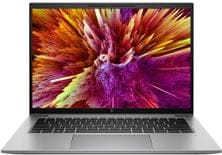
Please select specific configurations for the laptops to get a more accurate comparative review
Review
Performance
System and application performance
Gaming
Performance in popular 3D games
Display
Viewing angle, color accuracy, brightness
Battery Life
Potential battery life in light and average use
Connectivity
Ports, webcam and other interfaces
Portability
Design, materials, durability and usability
Pick the usage scenario that best matches your needs
Value for money (Beta)
Key Differences
Advantages of the Lenovo ThinkPad P14s Gen 4
- Slightly easier to carry: weighs 110 grams less (around 0.24 lbs)
- Around 73% better multi-core CPU performance in the Cinebench 2024 test
- Can run popular games at about 16-22% higher FPS
- Performs slightly better (up to 12%) in 3DMark Steel Nomad Lite
- Provides 60% higher max. screen brightness: 400 vs 250 nits
Advantages of the HP ZBook Firefly 14 G10
- Features a much bigger (~30%) battery – 51 against 39.3 watt-hours
- Thinner bezels and 2% higher screen-to-body ratio
- Display has support for touch input
- User-upgradable RAM (up to 64GB)
Tests and Specifications
Comparison table of test results and technical specsCase
| Weight | 1.34 kg (2.95 lbs) | 1.45 kg (3.2 lbs) |
| Dimensions | 317.7 x 227.36 x 17.95 mm 12.51 x 8.95 x 0.71 inches |
315.6 x 224.3 x 19.9 mm 12.43 x 8.83 x 0.78 inches |
| Area | 722 cm2 (112 inches2) | 708 cm2 (109.8 inches2) |
| Screen-to-body ratio | ~78.7% | ~80.3% |
| Side bezels | 8.1 mm | 7.1 mm |
| Colors | Black, Gray | Silver |
| Material | Top: Aluminum Middle: Plastic Bottom: Plastic |
Aluminum |
| Transformer | No | No |
| Opening angle | 180° | 175° |
Size comparison
| Cooling system | Active | Active |
| Vapor chamber | No | No |
| Liquid metal | No | No |
| Number of fans | 1 | 1 |
| Noise level (max. load) | 46.2 dB | 46 dB |
Display
| Size | 14 inches | 14 inches |
| Type | IPS LCD | IPS LCD |
| Refresh rate | 60 Hz | 60 Hz |
| PPI | 162 ppi | 162 ppi |
| Aspect ratio | 16:10 | 16:10 |
| Resolution | 1920 x 1200 pixels | 1920 x 1200 pixels |
| HDR support | No | No |
| Sync technology | No | No |
| Touchscreen | No | Yes |
| Coating | Matte | Matte |
| Ambient light sensor | No | Yes |
| Contrast | 1000:1 | - |
| sRGB color space | 100% | - |
Max. brightness
Battery
Capacity
| Full charging time | 1:30 hr | 2:00 hr |
| Battery type | Li-Po | Li-Po |
| Replaceable | No | No |
| Fast charging | Yes | Yes |
| Charging via USB (Power Delivery) | Yes | Yes |
| Charging port position | Left | Left |
| Charge power | 65 / 100 W | 65 W |
| Cable length | - | 1 meters |
| Weight of AC adapter | 300 / 392 grams | 300 grams |
CPU
CPU name
| Base frequency | 1.9 GHz | 1.3 GHz |
| Turbo frequency | 4.6 GHz | 4.6 GHz |
| Cores | 12 (4P + 8E) | 10 (2P + 8E) |
| Threads | 16 | 12 |
| L3 Cache | 12 MB | 12 MB |
| Integrated GPU | Intel Iris Xe Graphics (80EU) | Intel Iris Xe Graphics (80EU) |
| Fabrication process | 10 nm | 10 nm |
Benchmarks
Geekbench 6 (Single-Core)
Geekbench 6 (Multi-Core)
Cinebench 2024 (Single-Core)
Cinebench 2024 (Multi-Core)
Graphics Card
GPU name
| TGP | 30 W | - |
| Nvidia Optimus | Yes | - |
| Type | Dedicated | Dedicated |
| Fabrication process | 8 nm | 8 nm |
| FLOPS | 4 TFLOPS | 3.1-7 TFLOPS |
| Memory size | 4 GB | 4 GB |
| Memory type | GDDR6 | GDDR6 |
| Memory bus | 64 bit | 64 bit |
| Memory speed | ~12 Gbps | ~12 Gbps |
| Shading units (cores) | 2048 | 2048 |
| Texture mapping units (TMUs) | 64 | 64 |
| Raster operations pipelines (ROPs) | 32 | 32 |
| GPU performance | 4 TFLOPS | 3.1-7 TFLOPS |
GPU Benchmarks
Steel Nomad Lite Score
| Blender GPU | 427 | 387 |
| Solar Bay | 8929 | 7498 |
Expected FPS based on average performance across 9 popular games. Details
RAM
RAM size
| Channels | 2x8 GB | 1x8 GB |
| Clock | 4800 MHz | 4800 MHz |
| Type | LPDDR5X | DDR5 |
| Upgradable | No | Yes |
| Total slots | - | 2 |
| Max. ram size | - | 64 GB |
Storage
Storage size
| Bus | PCI-E Gen 4.0 (4x) | PCI-E Gen 4.0 (4x) |
| Storage type | SSD (M2) | SSD (M2) |
| Channels | 1x256 GB | 1x256 GB |
| Upgradable | Yes | Yes |
| Total slots | 1 | 1 |
| NVMe | Yes | Yes |
Sound
| Audio chip | Realtek ALC3287 | Realtek ALC245 |
| Speakers | 2.0 | 2.0 |
| Power | 2x2W | 2x1W |
| Dolby Atmos | Yes | No |
| Loudness | ~78.1 dB | ~78 dB |
| Microphones | 2 | 2 |
Connectivity
| Wi-Fi standard | v6E | v6E |
| Bluetooth | v5.3 | v5.3 |
| Fingerprint | Optional | Optional |
| Infrared sensor | Optional | Optional |
| Optical drive | No | No |
| Webcam | Above the display | Above the display |
| Webcam resolution | 2560 x 1440 | 2560 x 1440 |
| USB-A | 2x USB 3.2 | 2x USB 3.2 |
| USB Type-C | 2x USB 4.0 | 2x USB 4.0 |
| Thunderbolt | Thunderbolt 4 | Thunderbolt 4 |
| HDMI | 1x HDMI 2.0 | 1x HDMI 2.0 |
| DisplayPort | No | No |
| VGA | No | No |
| Audio jack (3.5 mm) | Yes | Yes |
| Ethernet (RJ45) | Yes | No |
| SD card reader | No | No |
| Proprietary charging port | No | No |
Input
| Keyboard type | Island | Island |
| Numpad | No | No |
| Backlight | Yes | Optional |
| Key travel | 1.5 mm | 1.5 mm |
| Size | 11.5 x 6.1 cm | - |
| Surface | Plastic | Glass |
| Windows Precision | Yes | Yes |
Further details
Notes on ThinkPad P14s Gen 4:
- The memory type can be either LPDDR5X (not upgradable, 16/32/64 GB soldered) or DDR5 (can be upgraded up to 48 GB).
*Disclaimer! Ports, speakers, display, and other specifications can vary depending on the laptop's specific configuration or region.
Cast your vote
Total votes: 5